Twelve Months of Boring Tech: My Year Without Chasing a Single Framework
Photo: Gangulybiswarup, CC BY 4.0, via Wikimedia Commons
Somewhere around last October, I realized I had a problem. My RSS reader had 47 feeds in it. My GitHub stars list read like a museum of abandoned experiments. And my actual portfolio — the thing that's supposed to get me hired — was running on a stack I hadn't meaningfully upgraded in three years, mostly because every time I sat down to work on it, I spent the first two hours reading about what I should be rebuilding it with instead.
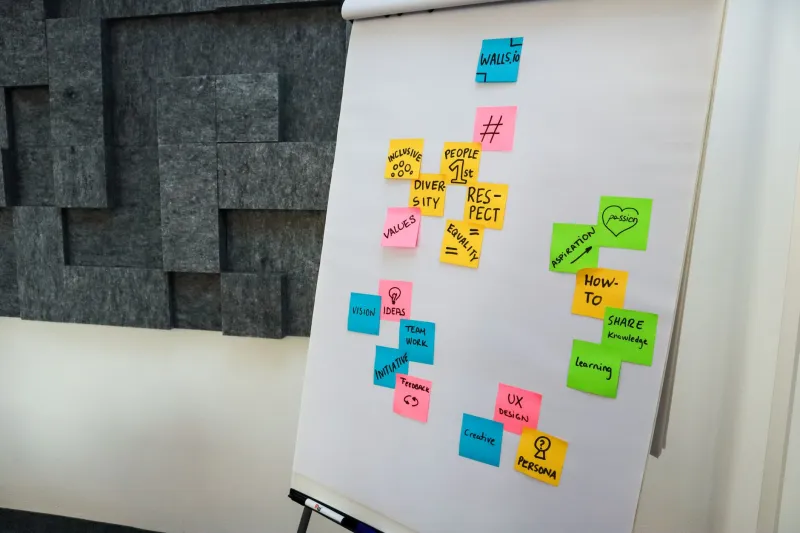
So I made a deal with myself: for twelve months, no new frameworks. No migrations. No rewrites. If a library I already knew solved the problem, that's what I used. If something broke, I fixed it in place. The rule was simple enough to fit on a sticky note, which is exactly where I put it, right above my monitor.
The Withdrawal Phase Is Real
The first six weeks were genuinely uncomfortable. It felt like being on a diet during Thanksgiving — everyone around me was talking about the shiny new thing, and I was deliberately ordering the same meal I've had for years.
A major meta-framework dropped a headline version in month two. My group chat would not shut up about it. A friend rebuilt his entire side project over a weekend and posted a gorgeous demo that got a few hundred likes. I remember sitting there with my plain old setup, feeling a little like the last person at the party.
Here's what I noticed, though: my friend's demo was beautiful, and the project was still unfinished by spring. Meanwhile, I shipped three things in that same window. Small things, but finished things. That distinction — the difference between starting and shipping — turned out to be the entire story of the year.
What Actually Got Better
Velocity, and not the fake kind. When you stop re-learning your tools every quarter, something funny happens: you get fast. Not tutorial-fast, actually fast. I know where the sharp edges are in my stack. I know which patterns bite at scale and which ones don't. By month four, I was building features in an evening that would have taken me a weekend the year before.
The 2 a.m. dependency emergencies mostly disappeared. This one surprised me. A big chunk of my late-night firefighting over the past few years wasn't caused by my code — it was caused by upgrading things I didn't need to upgrade. Lockfile conflicts, breaking changes in a patch release, a transitive dependency that vanished overnight. When your stack stops moving, most of that noise just... stops. I can count on one hand the number of production scares I had this year, and I'm counting on a hand that used to be raised in panic on a monthly basis.
My confidence stopped being borrowed. I didn't realize how much of my technical self-esteem was outsourced to novelty — knowing the new thing before other people did. Strip that away and what's left is either real skill or the absence of it. Turns out some of it was real. That's a good feeling, and it shows up in interviews, in code reviews, in how quickly I can say "yes, I can build that" without hedging.
What I Genuinely Missed
I want to be honest here, because the anti-hype take can become its own kind of dogma, and I don't want to trade one religion for another.
I missed the fun. There's a real joy in learning something new, and some of the best developers I know are fueled almost entirely by curiosity about shiny tools. I also missed some legitimate improvements — a couple of the releases I ignored this year solved problems I complain about weekly. Not everything in the release-notes economy is noise. Some of it is genuinely great work by people who care.
And there was a professional cost. In a couple of job conversations, my stack sounded dated on paper, even though the underlying concepts transfer everywhere. I had to get better at translating — explaining that deep experience with one ecosystem is mostly experience with the problems, and problems port over. Most interviewers got it. A few didn't. That's the tax, and you should know it exists before you sign up.
The Case for Boring, Stated Plainly
Here's the argument I'd make to my younger self, or to anyone stuck in the rebuild loop: the industry markets novelty because novelty sells courses, conference talks, and migration guides. It does not sell you a finished project. Nobody has ever hired me because I adopted a framework three weeks after its 1.0. People have hired me because I could point at real things I built and maintained.
Boring tech is an accelerant precisely because it gets out of your way. The interesting problems — the ones that make you better — are rarely about which framework you picked. They're about data modeling, edge cases, accessibility, performance under real traffic, the million small decisions that no changelog will make for you.
The year's over now. The sticky note is coming down. I'll probably try some new tools in the next twelve months, deliberately and on my own terms. But I'm keeping one rule from the experiment permanently: nothing gets adopted because it's new. Everything gets adopted because it solves a problem I actually have.
Turns out that's not boring at all. That's just being a professional.